-
Having witnessed a community-designed transitional justice process for climate harms in South Africa, I started thinking: Are other communities affected by climate change developing their own backward- and forward-looking measures for climate harms, which could be seen as transitional justice?
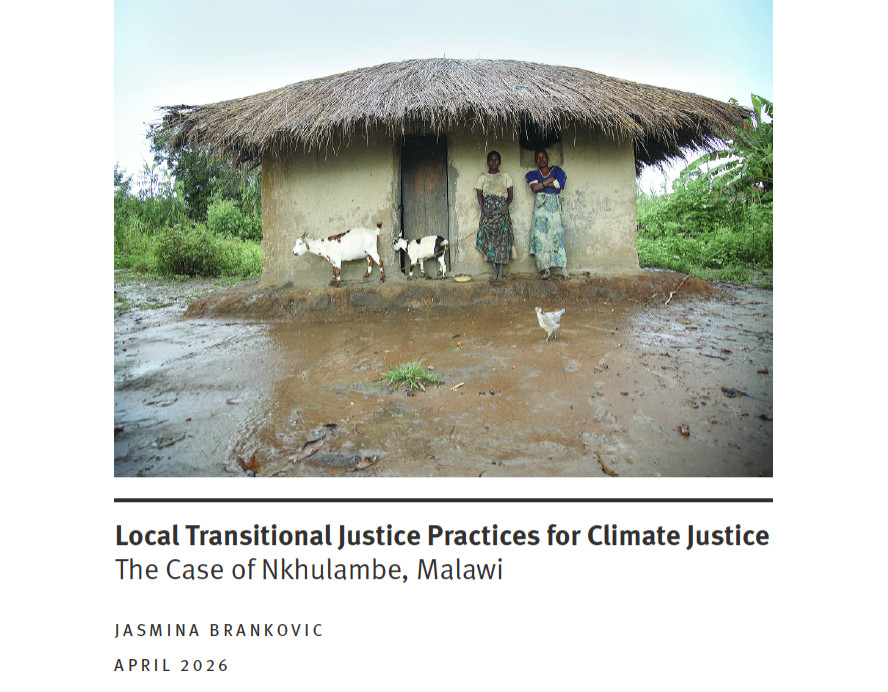
Working with the Civil Society Network on Climate Change (CISONECC), I conducted research with residents of Nkhulambe, an area of Malawi badly affected by climate disasters and creeping climate change. Several findings emerged:
➡️ Climate harms: While climate change is long term and climate impacts are likely to continue, residents experience a broad range of unacknowledged climate harms that could be prevented and reduced. These relate to loss of life, physical health, homes, infrastructure, education, livelihoods, food security, cultural practices, social order, and mental health.
➡️ Truth telling: Residents engage in truth telling on the causes and consequences of climate harms in community governance structures, cultural and religious ceremonies, and other events, seeking to share experiences, raise awareness, enable community and external learning, and build solidarity for action.
➡️ Memorialisation: Residents gather in the community and use traditional and religious practices to remember and honour those lost, help each other heal, enable community and external learning, and shape the way climate harms are talked about.
➡️ Participatory reform: Arguing that affected communities have knowledge and solutions that better respond to climate harms, residents advocate for participatory institutional and procedural reforms to facilitate more holistic climate action and contribute to non-recurrence at the national and international levels.
These efforts, combined with climate readiness initiatives, suggest that (1) acknowledging the backward-looking measures developed by affected communities enriches climate responses, and (2) applying a transformative transitional justice lens to existing community practices may open new avenues towards climate justice.
The report is available here: https://lnkd.in/eFRB8HK8
![]()
![Profile Photo]()
![Profile Photo]()
![Profile Photo]() liked this
liked this